
Agentic AI Future in Pharma–HCP Engagement?
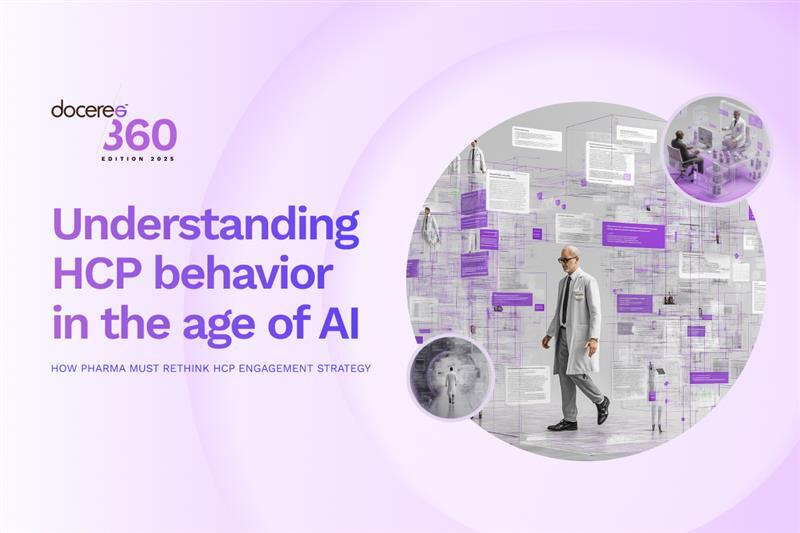
Doceree360 report outlines six transformative shifts that will redefine pharmaceutical marketing by 2027
Doceree, the AI-powered operating system for healthcare marketing, has released its 2025 edition of Doceree 360: Understanding HCP Engagement in the Age of AI, forecasting a seismic shift in how pharmaceutical brands engage healthcare professionals (HCPs). The report predicts that by 2026–27, agentic AI systems will become the default interface for pharma–HCP engagement, enabling scalable, context-aware, and clinically relevant interactions that elevate both human teams and patient outcomes.
AI Moves from Support to Strategic Driver
According to the report, agentic AI will move beyond traditional campaign marketing to deliver validated, compliant, and real-time intelligence embedded directly into clinical workflows. These systems will handle high-volume, repetitive tasks while freeing human representatives to focus on strategic, relationship-driven engagement.
Doceree’s analysis projects:
- 30–45% productivity gains across pharma–HCP workflows
- 75–85% automation of current engagement tasks within five years
“We are entering a phase where AI doesn’t just support engagement—it defines it,” said Harshit Jain, MD, Founder and Global CEO of Doceree. “Agentic AI delivers what traditional engagement cannot: instant synthesis of approved data, zero scheduling friction, and consistency across every interaction.”
Six Predictions That Will Reshape Pharma Marketing
The Doceree 360 report outlines six key developments expected to transform the industry:
1. Agentic AI Becomes the Default Interface
By 2027, AI agents will operate within strict clinical and regulatory guardrails, scaling engagement while human reps focus on complex, high-value interactions.
2. Clinical Workflows Become the New Battleground
Engagement will shift to real-time decision intelligence delivered at the point of care, embedded within EHRs and activated only when clinically relevant.
3. Unified Platforms Replace Fragmented Solutions
Pharma organizations will consolidate disparate systems into unified orchestration layers for governance, compliance, measurement, and channel coordination.
4. Affordability Intelligence Becomes Essential
With 93% of prescribers influenced by patient cost, embedded co-pay and access tools will become critical to therapy adoption and adherence.
5. Personalization Evolves to Live Context States
AI will dynamically adapt to what an HCP is doing in the moment, enabling hyper-relevant engagement beyond static segmentation.
6. Measurement Expands to Creative Quality
AI will optimize visual hierarchy, emotional resonance, and compliance adherence—making creative execution a measurable competitive advantage.
Scaling Trust and Impact Through AI
Kamya Elawadhi, Chief Client Officer at Doceree, emphasized that agentic AI must be governed responsibly and trained on verified sources to earn clinical trust. “Pharma brands that embrace agentic AI thoughtfully will transform from information providers to indispensable partners in care,” she said.


